Medical Services Design: Square Posts & Web Cover Templates
In the fast-paced world of healthcare marketing, visual communication isn't just about looking good; it's about building immediate trust. Whether you are a clinic manager, a private practice owner, or a graphic designer working within the medical niche, you face a specific challenge: how do you convey professionalism, cleanliness, and empathy in a single glance? This is exactly where the Medical Services Square Post & Web Cover templates shine. They aren't just static images; they are foundational design assets built to bridge the gap between clinical professionalism and modern digital engagement.
The reality of running a medical or wellness business today is that you need to be everywhere at once. You need a robust Instagram presence to share health tips, a professional Facebook banner to announce new services, and a cohesive web aesthetic to reassure potential patients before they even walk through the door. However, generic stock imagery often falls flat, looking sterile or impersonal. This template package offers a different solution: a structured, editable framework that allows you to maintain visual consistency across platforms while injecting your unique brand personality into the design.
The Anatomy of a Professional Healthcare Aesthetic
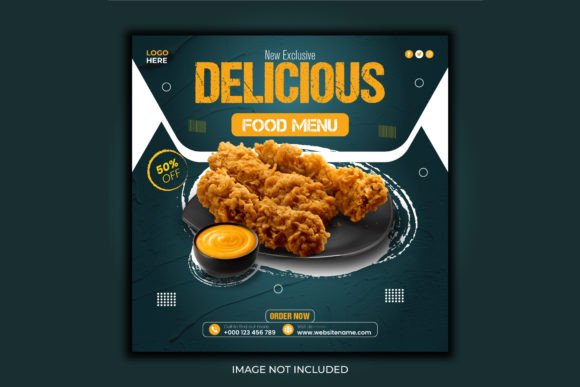
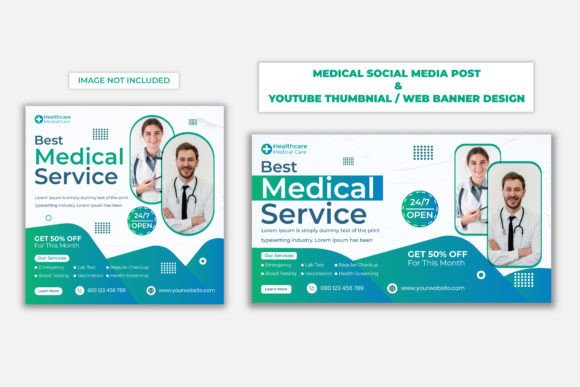
When we talk about the "Medical Services" look, we are often referencing a specific visual language: clean lines, ample white space, calming color palettes (think teals, blues, and soft whites), and clear typography. The Medical Services Instagram Post Template included in this set is designed at 1080×1080 pixels, the gold standard for social media feed optimization. But beyond the dimensions, the value lies in the layout structure.
These templates are not merely static pictures; they are Fully Editable vector files created in Adobe Illustrator CC. Why does this matter to you? Because a raster image (like a standard JPEG) is a dead end. You can change the text, but you cannot easily alter the layout, swap out iconography, or scale the design without losing quality. Vector files, specifically the Eps File (CC Version) included here, allow for infinite scalability. Whether you are designing a small icon for a website tab or a large poster for a waiting room, the lines remain crisp and the colors remain true (thanks to the RGB Color mode optimized for digital screens).
For the small business owner, this means you aren't just buying a "picture" of a medical ad; you are acquiring a modular design system. The "Well Organized" layers mean that elements are grouped logically—backgrounds, text placeholders, and graphic elements are separated—making the editing process intuitive even if you aren't a senior designer.
Bridging the Gap: From Instagram Feed to Web Banner
One of the most common pitfalls in healthcare branding is the disconnect between social media and the main website. A patient might find a vibrant, modern post on Instagram, click through to the website, and be greeted by a dated, pixelated banner. This inconsistency creates cognitive dissonance and can erode trust.
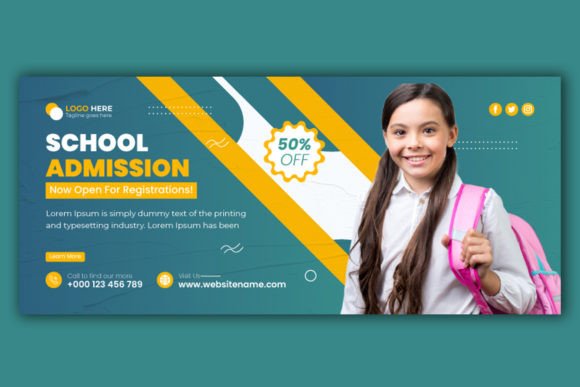
The Healthcare Medical Services web cover banner template solves this issue directly. Sized at 1280×720 Pixels, it is perfectly calibrated for standard web headers, Facebook covers, or YouTube thumbnails. Because it shares the same design DNA as the square post template, you can ensure that your visual identity remains seamless.
Think about the user journey. A potential patient sees a square post about "Summer Allergy Tips" on their feed. They click your profile, which looks cohesive. They visit your website, and the banner reinforces the same color scheme and typographic style. This is the essence of brand recognition. It tells the user that you are detail-oriented and professional—qualities highly desirable in a medical provider. The templates allow you to create this high-end brand identity without the overhead cost of hiring an agency for every single social media update.
Practical Applications for Modern Healthcare Marketing
The versatility of these design assets extends far beyond simple announcements. Because the files are fully editable, you can repurpose them for a multitude of marketing needs. Here is how you can leverage these templates to maximize your return on investment:
- Social Media Graphics: Use the square template for patient testimonials, staff spotlights, "Did You Know?" health facts, or seasonal vaccination reminders. The 1080×1080 format is also natively supported by LinkedIn and Facebook feeds.
- Web Design Elements: Beyond the main header, you can extract elements from the web cover to create "Call to Action" buttons or sidebar graphics for your blog, ensuring visual consistency throughout your digital ecosystem.
- Digital Products & Newsletters: If your practice sends out a monthly health newsletter, using these templates ensures your email marketing looks as polished as your in-person care. It elevates the professional presentation of your communication.
- Print Materials: While the color mode is RGB (ideal for screens), you can convert these files to CMYK for flyers, appointment cards, or waiting room posters. The vector nature of the Eps File ensures that text and shapes remain sharp on paper.
- Event Branding: Hosting a community health fair or a webinar? These templates can be adapted into invitations or digital event covers.
Mastering the Edit: A Guide for Non-Designers
For the entrepreneur or content creator who may not be an Adobe expert, the prospect of editing an Illustrator file can seem daunting. However, the inclusion of a Help File (Fonts Download Link) is a critical feature that streamlines this process. One of the biggest frustrations in using templates is opening a file only to find that the text is garbled because you don't have the specific premium font installed.
The help file directs you exactly where to source the typography used in the design. This is vital for readability. Medical information must be legible and clear. The designers of this template have already done the heavy lifting of font pairing—selecting typefaces that complement each other, balancing a clean sans serif font for body text with a more distinct header style to draw the eye.
When you open the files in Illustrator, focus on the layers panel. Because the files are well organized, you will likely see layers labeled for "Text," "Background," and "Images." To customize the template for your practice:
- Update the Imagery: The template notes that "Image is not included." This is standard for licensing reasons, but it is actually a benefit. It forces you to use photos of your facility, your staff, or high-quality stock photos that specifically match your demographic. A generic model might not represent your patient base, so uploading your own images builds authentic trust.
- Adjust the Color Palette: While the default medical blue/teal is effective, you can use the "Recolor Artwork" tool in Illustrator to match the template to your specific brand hex codes in seconds.
- Refine the Copy: Replace the placeholder text with your specific call to action. Whether it is "Book an Appointment," "Meet Our Team," or "Urgent Care Hours," ensure the text is concise.
Elevating Your Brand Identity Through Design
In the crowded space of healthcare medical services, visual communication is often the first point of contact. It is the digital handshake. By utilizing a structured, high-quality template system, you move away from reactive, ad-hoc posting and move toward a proactive, strategic content calendar.
The value of these templates lies in their ability to democratize modern typography and layout design. You don't need to understand kerning, leading, or vector paths to produce content that looks like it was made by a professional agency. You simply need to understand your message and let the template provide the structure.
Ultimately, whether you are a graphic designer looking to speed up your workflow for a medical client, or a clinic manager trying to keep your social media active, these assets provide a practical, professional solution. They ensure that every post, banner, and cover you publish reinforces the message that your practice is modern, organized, and ready to care for your community. By maintaining this standard of visual excellence, you aren't just decorating a feed; you are building a brand that patients can rely on.